La mágica cueva a una hora y media de Madrid que se descubrió en Nochebuena y que puedes visitar
Viajes por España
Las características de las formaciones rocosas de estas cuevas resultan variadas y singulares
Belenes, mercadillos 'eco' y rituales centenarios: destinos navideños para huir de la masificación
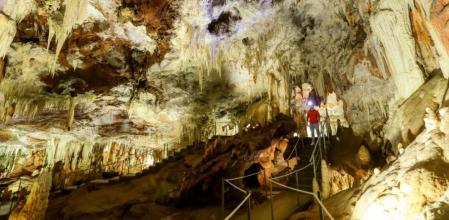
Las Cuevas del Águila son una escapada rural ideal para disfrutar de la naturaleza durante la época navideña.
En el municipio de Arenas de San Pedro, en la provincia de Ávila, se encuentran unas cuevas con unas espectaculares formaciones kársticas que no dejarán indiferentes a sus visitantes, las Cuevas del Águila. A tan solo hora y media de Madrid, este destino rural representa una excelente alternativa para disfrutar de una escapada para viajar por España durante la temporada navideña. Un lugar donde descansar de las aglomeraciones y las masificaciones propias de las grandes ciudades durante esta época del año. Además, se trata de un momento idóneo para recorrer esta gruta, ya que su descubrimiento tuvo lugar durante la jornada previa a la Navidad, el 24 de diciembre de 1963. Aquel día, un grupo de cinco jóvenes recorrían el Cerro del Águila cuando se percataron de un agujero por el que salía vapor. Al explorar una pequeña abertura acabaron por dar con las que hoy día son conocidas como las Cuevas del Águila, tal y como se relata en su página web oficial.
Este espacio natural está repleto de formaciones kársticas, que han sido datadas en aproximadamente 12-14 millones de años, de acuerdo con Turismo de Ávila. Las filtraciones de lluvia y las corrientes de aguas subterráneas erosionaron estas cavidades de una manera lenta pero constante. Hasta crear este complejo ubicado a cincuenta metros de profundidad, que cuenta con un total de un kilómetro de galerías con diversos tipos de formaciones geológicas. Las Cuevas del Águila, situadas en el Cerro del Águila o Cerro de Romperropas, están ocultas por un bosque de encinas. Afortunadamente, pueden ser visitadas en la actualidad, por medio de un recorrido guiado de cuarenta minutos, que se mantiene a 17 grados durante todo el año y con una humedad de casi el 100%.
Así son las espectaculares Cuevas del Águila
Las Cuevas del Águila se dividen en varias naves, tal y como apuntan desde la oficina de Turismo de Ávila. La principal presenta una altura de 20 metros en su punto más elevado, mientras que las demás cuentan con formas irregulares. Sin embargo, lo que resulta más fascinante de estas cuevas es la variedad de colores, texturas y siluetas de sus formaciones geológicas.

Lee también

Durante el recorrido, los visitantes podrán identificar distintas clases de espeleotemas, como se conoce a los depósitos minerales que se generan dentro de las cuevas o cavernas. Entre ellas se encuentran las clásicas estalagmitas y las estalactitas, pero también es posible observar columnas y coladas espeleotémicas, acículas o anthoditas, entre otros. A lo largo de la visita, el guía compartirá información acerca de estas formaciones, así como acerca de cuáles son las singularidades de estas cuevas.